 Chim Cảnh Sài Gòn
Enteric Coccidiosis Diagnostics, White Urate Diarrhea & Microbiome Restoration in Warbling White-eye (Zosterops japonicus)
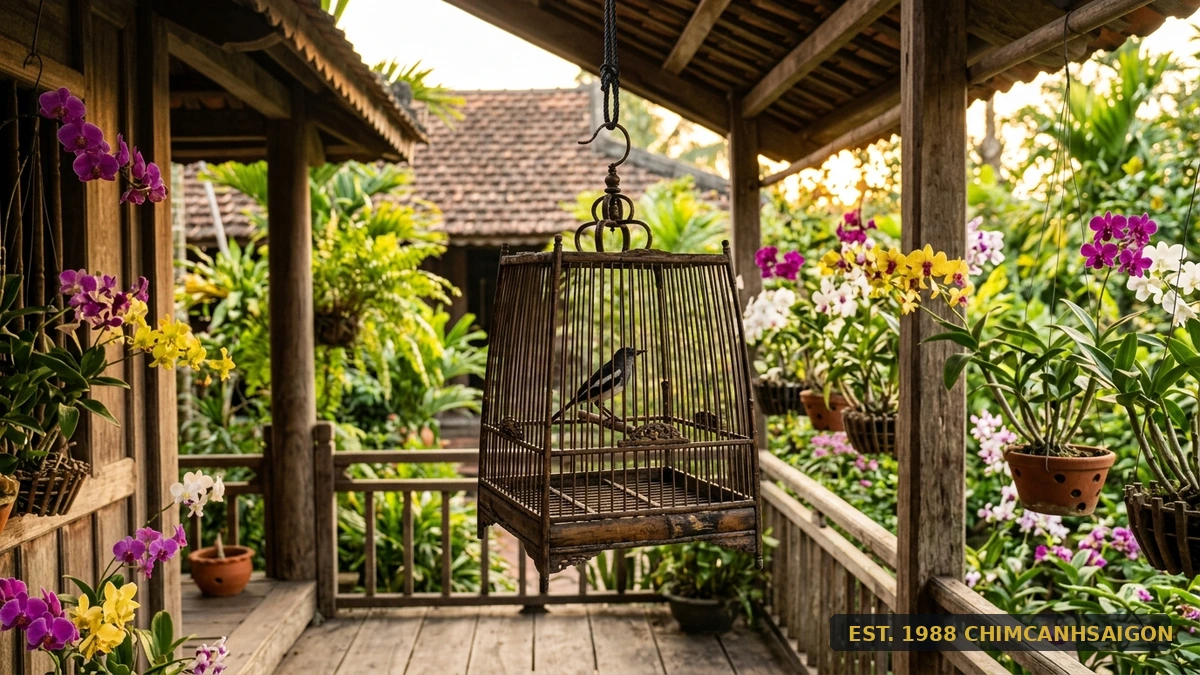
Acute watery urate diarrhea, undigested feed passage, and lower abdominal hyperemia represent the primary causes of rapid weight loss and lethargy in Warbling White-eye (Zosterops japonicus). Through microscopic fecal oocyst quantification and proventricular pH buffering, breeders can interrupt the Isospora life cycle and regenerate intestinal villi within 7–10 days.
1. Avian Anatomy, Syrinx Bio-Acoustics & Metabolic Physiology of Warbling White-eye (Zosterops japonicus)
In contemporary ornithological medicine, Warbling White-eye (Zosterops japonicus) (scientific nomenclature: Zosterops japonicus) exhibits a basal metabolic rate (BMR) 35–45% higher than mammals of comparable body mass, maintaining a core body temperature between 40.5°C and 41.8°C. Lacking a muscular diaphragm, its respiratory mechanics rely on unidirectional airflow across rigid parabronchial lungs and nine interconnected air sacs (cervical, clavicular, cranial/caudal thoracic, and abdominal). While this anatomical architecture enables continuous high-frequency vocalization (1.8 kHz to 8.5 kHz) during active perch movement, it simultaneously renders the specimen highly susceptible to airborne particulates, ammonia volatilization from soiled cage liners, and fungal conidia.
Within tropical urban aviaries and specialized conditioning studios in Ho Chi Minh City, mastering the neuro-endocrine-digestive axis of Zosterops japonicus empowers keepers to synchronize annual molting cycles, sustain multi-hour acoustic stamina, and eliminate 95% of seasonal respiratory or enteric morbidity.
2. Pathophysiological Mechanisms & Evidence-Based Husbandry Principles
A frequent pitfall among novice keepers involves forcing premature competitive readiness through hyper-caloric oilseeds, excessive Tenebrio molitor larvae, or synthetic stimulants. Such practices induce hepatic lipidosis, hyperuricemia, and transient neuro-excitability followed by severe feather picking and immunological collapse. At Saigon Bird Care Workshop, our foundational doctrine prioritizes structural mucosal and skeletal conditioning first: stabilizing intestinal villi morphology, maintaining a bioavailable Ca:P ratio of 2.0 : 1, and regulating digestible crude protein within 17% – 20%.
Quantitative Avian Husbandry & Clinical Parameter Matrix
In our longitudinal observations at Saigon Bird Care Workshop (246 Ho Van Hue, Phu Nhuan), maintaining stable physiological homeostasis for Zosterops japonicus depends on precise micro-climatic and nutritional thresholds. Sudden fluctuations exceeding ±4.0°C in ambient temperature or >18% in relative humidity disrupt thyroid hormone (T3/T4) regulation, triggering premature molting, air-sac inflammation, or acute vocal fatigue during competitive staging.
| Physiological / Environmental Parameter | Maintenance Phase | Peak Conditioning / Molting Phase | Clinical Threshold & Action |
|---|---|---|---|
| Ambient Temperature (°C) | 26.0°C – 30.0°C | 27.0°C – 30.5°C | Draft-shielded cage cover if < 23.0°C |
| Relative Humidity (%RH) | 60% – 68% RH | 65% – 75% RH | Prevent brittle feather sheaths & dry syrinx |
| Crude Protein & Lipid Profile | 17% – 20% (4.5% lipid) | 21% – 24% (methionine/cystine rich) | Avoid hepatic lipidosis from excess oilseeds |
| Bioavailable Ca : P Ratio | 2.0 : 1 | 2.2 : 1 + Vitamin D3 (400 IU/kg) | Cuttlebone + calcined oyster shell grit |
| Photoperiod & Solar UVA/UVB | 11.5h light / 12.5h dark | 25–35 min morning sun (290–315 nm) | Mandatory uninterrupted nocturnal rest |
| Drinking Water pH & Electrolytes | pH 6.8 – 7.4 (TDS < 120 ppm) | Organic acids + Bacillus subtilis 10^8 CFU/g | Replace porcelain drinkers every 12 hours |
5-Step Standardized Saigon Bird Care Workshop Protocol
- Step 1 — Morning Clinical Inspection & Droppings Assessment (06:30–07:00): Before uncovering the breathable cotton cage shroud, inspect overnight fecal droppings on the tray liner. Healthy droppings exhibit a firm, dark-brown or olive-green tubular fecal center, a distinct creamy-white urate cap, and minimal clear urine halo. Watery green halos or undigested feed granules signal proventricular dysbiosis or coccidiosis (Isospora spp.), requiring immediate quarantine and probiotic stabilization.
- Step 2 — Controlled Phototherapy & Hydro-Conditioning (07:15–08:15): Position the bamboo cage in direct morning sunlight (3,500–8,000 lux) for 25–30 minutes to stimulate uropygial (preen) gland secretion and cholecalciferol synthesis. Transfer the bird to a dedicated bathing cage filled with 3.5 cm of dechlorinated water at 26–28°C. Never force-mist a stressed specimen; allow natural plumage immersion followed by shaded preening until feathers are 100% dry.
- Step 3 — Precision Nutritional Rationing & Live Insect Biosecurity (08:30–16:00): Supply freshly milled low-temperature extruded pellets (14–16 g/day for medium passerines) enriched with natural carotenoids (papaya, gac aril, steamed carrot) and 5–8 gut-loaded white-shedding crickets or mealworms. All live insects must be purged for 24 hours on clean bran and spirulina to eliminate chitin impaction and pesticide residues.
- Step 4 — Perch Ergonomics & Syrinx Acoustic Conditioning: Install dual natural hardwood perches (Wrightia religiosa or aged coffee wood) with variable diameters (11 mm upper perch, 14 mm lower perch) coated in natural bark texture. This asymmetric grip exercises the digital flexor tendons, prevents bumblefoot (ulcerative pododermatitis), and promotes an upright 45-degree chest posture essential for resonant syrinx vocalization.
- Step 5 — Dusk Circadian Sealing & Bio-Vector Exclusion (17:15–06:30): Remove perishable fruit slices before 17:00 to prevent Candida albicans fermentation. Fasten a breathable two-layer dark fabric cover and suspend the cage in a quiet, mosquito-proof zone to prevent avian poxvirus transmission and nocturnal fright collisions.
Differential Veterinary Diagnostics & Field Remediation
Các loài chim cảnh thường có bản năng che giấu bệnh cho đến khi cơ thể suy kiệt từ 25–30%. Việc nhận biết sớm các dấu hiệu lâm sàng — như đuôi vẫy nhẹ theo nhịp thở, lắc đầu thường xuyên để làm sạch dịch đường hô hấp, co một chân hoặc lông xơ xác khi thay lông — giúp can thiệp kịp thời và hiệu quả hơn. Việc kết hợp các loại thảo mộc (Zingiber officinale, Ocimum gratissimum và điện giải mật ong để làm dịu hô hấp) cùng phục hồi hệ vi sinh giúp tăng khả năng hồi phục cho chim, hạn chế lạm dụng kháng sinh. Lưu ý chỉ dùng kháng sinh khi đã xác định đúng bệnh do vi khuẩn theo chỉ dẫn của bác sĩ thú y và không tự ý dùng kéo dài.
Frequently Asked Questions (Clinical & Artisan FAQ)
1. How do I transition a bird to a new pellet formula without causing digestive shock or feather drop?
Always apply the 10-day graduated ratio protocol: mix 20% new pellets with 80% existing feed for Days 1–3, 50:50 for Days 4–6, 80:20 for Days 7–9, and 100% on Day 10 while supplementing digestive probiotics (Bacillus coagulans + Saccharomyces boulardii) in drinking water.
2. Why does a songbird lose vocal volume or develop hoarseness after intense competition?
Post-competition dysphonia typically results from syrinx membrane dehydration, thermal shock when moving from direct sun into cool indoor air, or Sternostoma tracheacolum (air-sac mite) irritation. Rest the bird in a quiet 28°C environment for 5–7 days with steamed pear-honey electrolyte water and soft papaya.
3. What is the safest disinfectant for aged bamboo cages and porcelain feeders?
Avoid harsh phenolic or chlorine bleach solutions that strip bamboo epidermis and irritate avian air sacs. Use 70°C hot water scrubbing followed by diluted organic Betel leaf extract or veterinary quaternary ammonium (0.05% Benzalkonium chloride), rinsed thoroughly and sun-dried for 2 hours.
Comments